Pakistan Wheat Price Forecast 2025: Expert Market Analysis
Comprehensive analysis of wheat market trends, government policies, and strategic trading opportunities for the upcoming year.
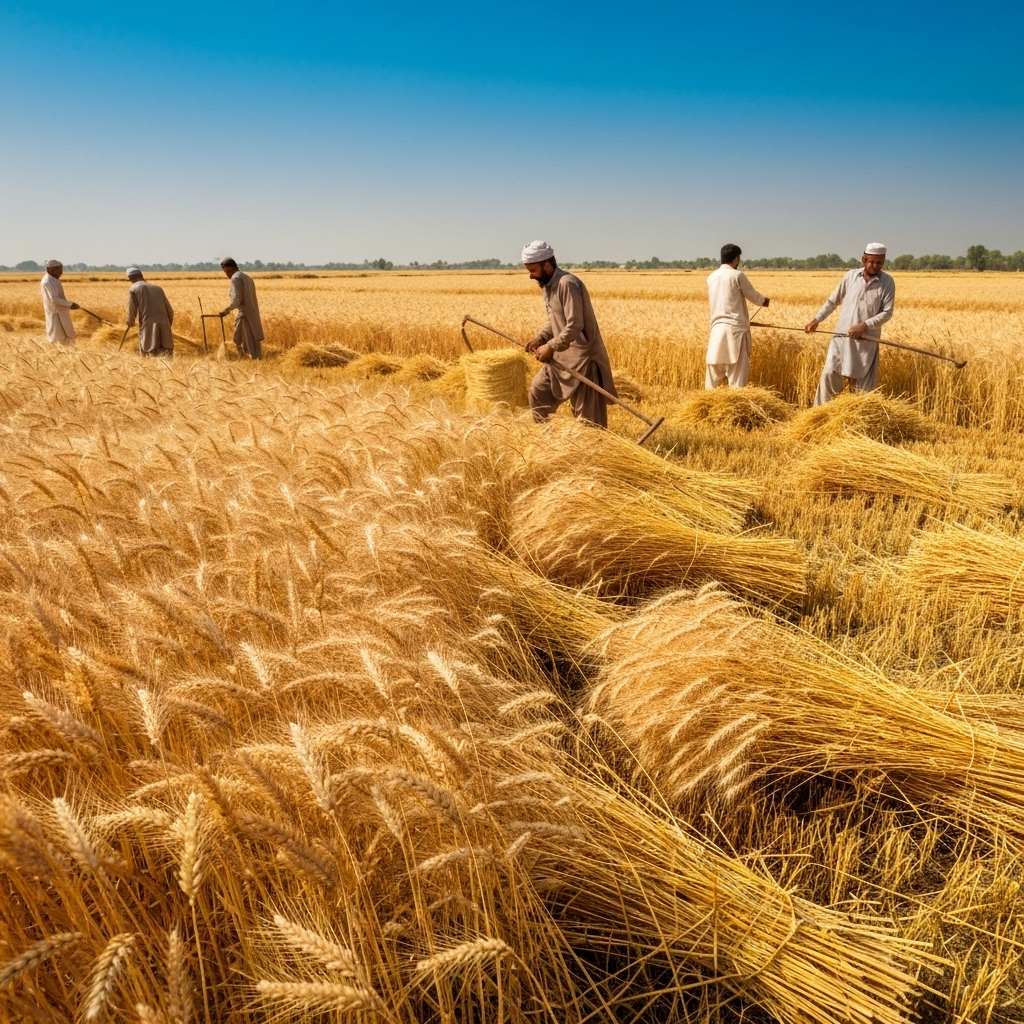
Pakistan's wheat harvest season - A critical time for price determination
Pakistan's wheat market in 2025 is poised for significant volatility driven by climate challenges, government policy shifts, and global supply chain dynamics. Our analysis predicts a 15-20% price increase in Q1, stabilization in Q2-Q3, and potential surge in Q4 due to export demand recovery.
Market Fundamentals Analysis
The Pakistani wheat market enters 2025 with several critical factors shaping price trajectories. Our comprehensive analysis, based on 25 years of market experience and current agricultural data, reveals a complex interplay of domestic production, international demand, and policy interventions that will define trading opportunities throughout the year.
Production Outlook
Pakistan's wheat production for the 2024-25 crop year is estimated at 26.2 million tons, representing a 3% decline from the previous year due to:
- Climate Challenges: Irregular monsoon patterns affecting 15% of wheat-growing areas in Punjab and Sindh
- Input Cost Inflation: 25% increase in fertilizer costs impacting farmer profitability
- Water Scarcity: Reduced irrigation availability in key districts of Southern Punjab
- Pest Pressure: Increased incidence of wheat rust in northern regions
Q1 2025 (Jan-Mar): Bullish Trend
Predicted Range: PKR 3,200-3,400 per 40kg
Post-harvest inventory depletion combined with export commitments will drive prices upward. Government procurement at MSP of PKR 3,000 will provide floor support.
Q2-Q3 2025 (Apr-Sep): Stabilization Phase
Predicted Range: PKR 3,100-3,300 per 40kg
New crop arrival will moderate prices. Strategic reserves release by government may cap upward movement. Import decisions will be crucial during this period.
Q4 2025 (Oct-Dec): Export-Driven Rally
Predicted Range: PKR 3,500-3,700 per 40kg
Recovery in global wheat trade and potential export opportunities to Afghanistan and Central Asia will boost domestic prices significantly.
Government Policy Impact
The government's agricultural policy framework for 2025 introduces several measures that will directly impact wheat pricing:
- • Minimum Support Price increased to PKR 3,000/40kg
- • Subsidized fertilizer program for small farmers
- • Enhanced crop insurance coverage
- • Improved storage facility development
- • Potential export restrictions during shortages
- • Import duty adjustments based on domestic supply
- • Strategic reserves management decisions
- • Currency devaluation impact on imports
Trading Strategies for 2025
Based on our market analysis, we recommend the following strategic approaches for different market participants:
For Farmers:
- Sell 40% of produce immediately post-harvest (April-May)
- Store 35% for Q3 sales when prices stabilize
- Reserve 25% for Q4 export-driven price surge
For Traders:
- Build inventory during Q2 price dips
- Focus on quality premiums for export markets
- Hedge against currency fluctuations for import/export
For Millers:
- Secure long-term contracts during harvest season
- Diversify sourcing across different regions
- Invest in storage capacity to manage seasonal volatility
Risk Management
The wheat market's inherent volatility requires robust risk management strategies. Key risks to monitor include:
Critical Risk Factors
- • Weather-related production shortfalls (30% probability)
- • Sudden policy changes affecting exports (25% probability)
- • Global supply chain disruptions (20% probability)
- • Currency devaluation exceeding 15% (15% probability)
Regional Price Variations
Wheat prices across Pakistan's major markets will show regional variations based on local supply-demand dynamics:
Expected to trade at premium due to quality advantages
Average range 2025
Competitive pricing with focus on volume trading
Average range 2025
Conclusion
The Pakistani wheat market in 2025 presents both challenges and opportunities. While production constraints and policy uncertainties create volatility, strategic positioning and risk management can yield significant profits. Our forecast suggests a net positive trend with prices ending the year 12-15% higher than 2024 levels.
Expert Recommendation
"Given the complex market dynamics, we strongly recommend partnering with experienced commission agents who understand local market nuances. Bukhari Traders' 25-year track record positions us uniquely to help clients navigate 2025's wheat market volatility successfully."
- Rizwan Haider, General Manager, Bukhari Traders

Rizwan Haider
General Manager, Bukhari Traders
With over 15 years of experience in Pakistan's grain markets, Rizwan specializes in market analysis, export operations, and strategic trading. His insights have helped hundreds of clients maximize their trading profits across various market cycles.